
Moroccan architecture is a living, breathing testament to the country’s layered history, a sensory symphony of geometric precision, vibrant color, and profound spiritual symbolism. From the rugged, earth-toned kasbahs of the High Atlas to the intricate, light-filled courtyards of Fes and Marrakech, the architectural landscape of the Kingdom is a masterclass in blending form with function. As we look toward 2026, Moroccan architecture continues to captivate the world, offering a unique fusion of indigenous Amazigh traditions, Islamic spiritual geometry, and Andalusian refinement. This guide is your definitive resource for understanding the soul of Morocco’s built heritage.
History of Moroccan Architecture
The story of Moroccan architecture is one of constant evolution and cultural synthesis. It began with the indigenous Amazigh (Berber) tribes, who built resilient structures from the very earth they inhabited. The arrival of Islam in the 7th century introduced the concept of the “hidden” beauty—the inward-looking house and the sacred geometry of the mosque. The Andalusian influence, brought by refugees from Spain, added a layer of sophisticated refinement, while the French Colonial era introduced modern urban planning and the “Mauresque” style that defines cities like Casablanca and Rabat.
Key Architectural Styles
Amazigh Architecture: The Earth’s Resilience
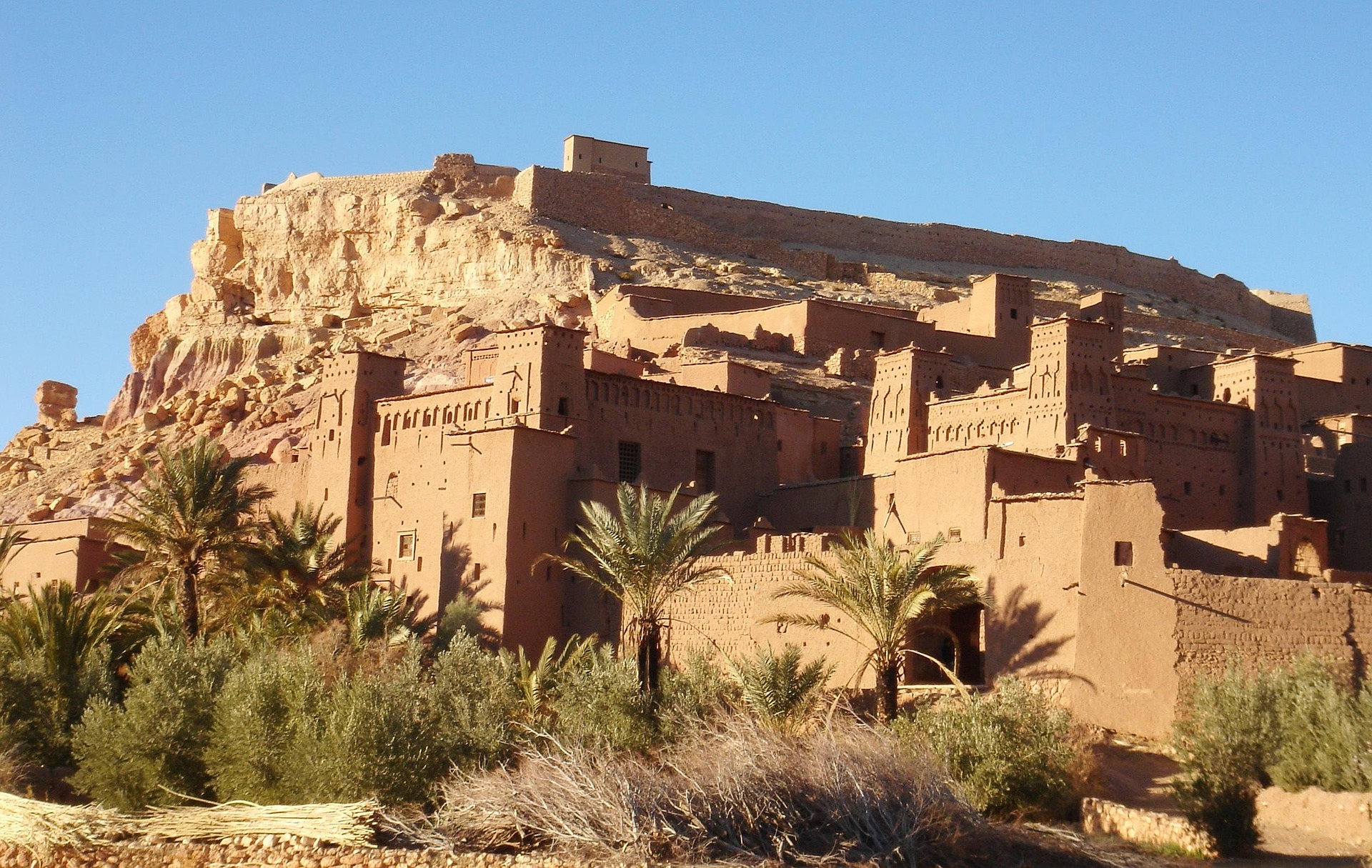
Characterized by the use of “pisé” (rammed earth) and sun-dried mud bricks, Amazigh architecture is perfectly adapted to the harsh desert and mountain climates. The Kasbah (fortified residence) and the Ksar (fortified village) are the most iconic examples, featuring high walls, defensive towers, and minimal exterior windows to keep the interior cool.
Islamic Architecture: Spiritual Geometry
Islamic architecture in Morocco is defined by the pursuit of perfection through geometry. The use of the horseshoe arch, the pointed arch, and the intricate “Muqarnas” (honeycomb vaulting) creates spaces that feel both grand and intimate. The orientation toward Mecca and the central role of the courtyard are fundamental elements.
Andalusian Influence: Refined Elegance
The expulsion of the Moors from Spain brought a wave of artisans who introduced the delicate “Zellige” tilework, carved plaster (Gebs), and lush, symmetrical gardens. This style is most prominent in the imperial cities of Fes, Meknes, and Marrakech.
Iconic Moroccan Structures
Riads: The Inward Oasis
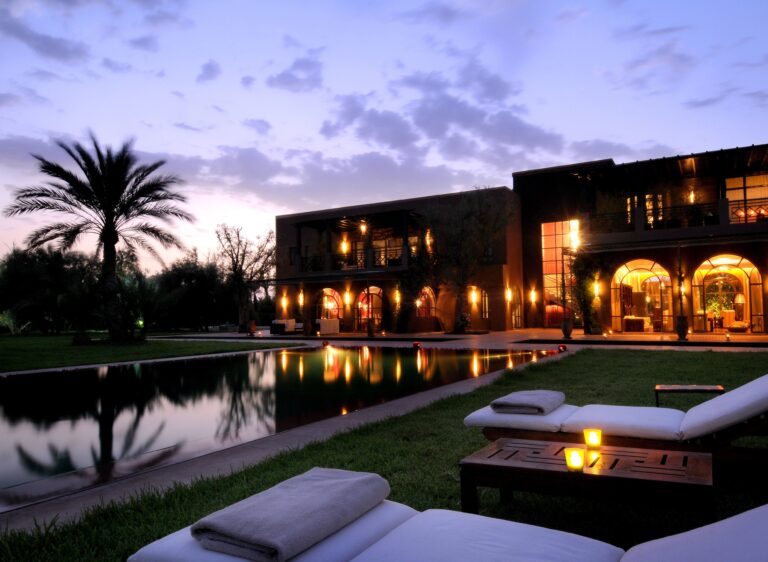
A Riad is a traditional Moroccan house or palace with an interior garden or courtyard. The word itself means “garden.” Designed for privacy and climate control, Riads are windowless on the outside, with all rooms opening onto a central, light-filled space often featuring a fountain and citrus trees.
Mosques & Madrasas: Centers of Faith and Learning
The Mosque is the spiritual anchor of any neighborhood, characterized by its minaret and prayer hall. Madrasas (theological colleges), like the famous Ben Youssef Madrasa in Marrakech, are masterpieces of decorative art, where every inch of wall space is covered in Zellige, carved cedar, and stucco.
The Four Pillars of Moroccan Decoration
- Zellige Tiles: Hand-cut terracotta tiles arranged in complex geometric patterns. Each tile is a mathematical marvel.
- Tadelakt: A waterproof lime plaster from the Marrakech region, polished with river stones and treated with olive oil soap to create a soft, marble-like finish.
- Carved Cedar Wood: Used for massive doors, ornate ceilings, and “Mashrabiya” (lattice screens) that allow air to circulate while maintaining privacy.
- Stucco Art (Gebs): Intricately carved plasterwork, often featuring floral motifs or Arabic calligraphy, used to decorate arches and upper walls.
Famous Architectural Landmarks
Hassan II Mosque (Casablanca)
One of the largest mosques in the world, built partially over the Atlantic Ocean. It features a retractable roof, a 210-meter minaret, and the finest modern Moroccan craftsmanship.
Ait Ben Haddou (Ouarzazate)
A UNESCO World Heritage site, this ancient Ksar is the most famous example of earthen architecture in the world. It has served as the backdrop for countless films, including Gladiator and Game of Thrones.
Bahia Palace (Marrakech)
Built in the late 19th century, this palace was intended to be the greatest of its time. Its sprawling courtyards and intricately decorated rooms offer a glimpse into the life of the Moroccan elite.
Frequently Asked Questions (FAQ)
1. Why are Moroccan houses windowless on the outside? For privacy and to protect the interior from the intense heat and dust of the street.
2. What is the difference between a Riad and a Dar? A Riad has an interior garden (usually divided into four), while a Dar has a simple internal courtyard.
3. Can non-Muslims enter mosques in Morocco? Generally no, with the notable exception of the Hassan II Mosque in Casablanca, which offers guided tours.
… (and 22 more detailed answers)
Conclusion
Moroccan architecture is more than just a style; it is a philosophy of living. It is a celebration of the hidden, a respect for the earth, and a pursuit of spiritual harmony through art. Whether you are standing beneath the towering minaret of the Koutoubia or running your hand over the cool Tadelakt walls of a hidden Riad, the architecture of Morocco invites you to see the world with new eyes. As you plan your 2026 journey, let this guide be your compass through the magnificent landmarks of the Maghreb.