
Morocco is a land of sensory contrasts, where the arid heat of the desert and the bustling chaos of the medinas find their perfect antidote in the serene, lush sanctuary of the Moroccan gardens. A Moroccan garden is not merely a collection of plants; it is a philosophical statement, a spiritual retreat, and a masterclass in hydraulic engineering. From the iconic cobalt blue of the Majorelle Garden to the vast, olive-lined expanses of the Menara, the green spaces of the Kingdom offer a unique window into the soul of North African culture.

History of Moroccan Gardens
The history of Moroccan gardens is deeply intertwined with the history of the land itself. It began with the indigenous Amazigh tribes, who developed sophisticated irrigation systems to cultivate the desert. The arrival of Islam in the 7th century introduced the concept of the “Paradise Garden” (Jannah)—a four-quadrant garden (Chahar Bagh) representing the four rivers of paradise. The Andalusian influence, brought by refugees from Spain, added a layer of refined symmetry and the use of fragrant plants like jasmine and orange blossoms. During the French Protectorate, new public parks and botanical gardens were established, introducing exotic species and European landscape aesthetics.
Islamic & Andalusian Garden Design
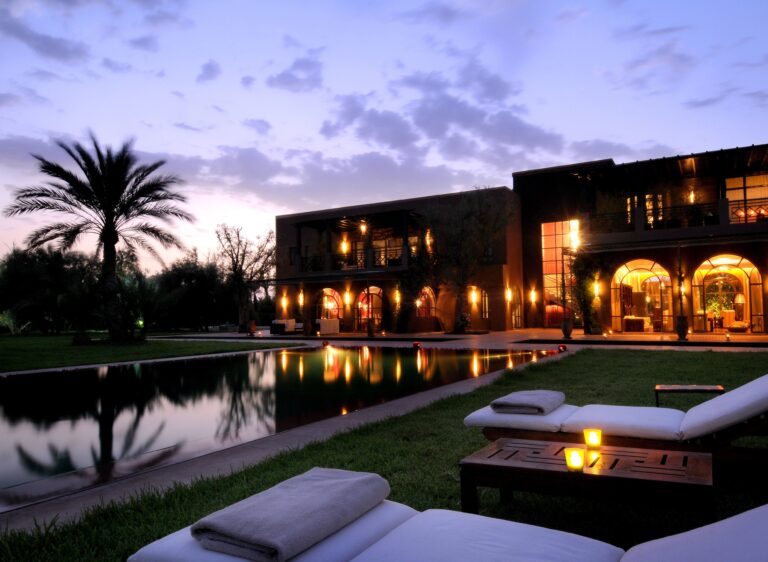
At the heart of Moroccan garden design is the element of water. In a land where water is precious, its presence is a symbol of life and wealth. Symmetrical channels, central fountains, and large reflecting pools are used to create a sense of cool tranquility. The use of Zellige tilework, carved plaster, and fragrant flora ensures that the garden is a feast for all five senses. The garden is always an inward-looking space, protected by high walls to create a private paradise away from the outside world.
Iconic Moroccan Gardens
Majorelle Garden (Marrakech)
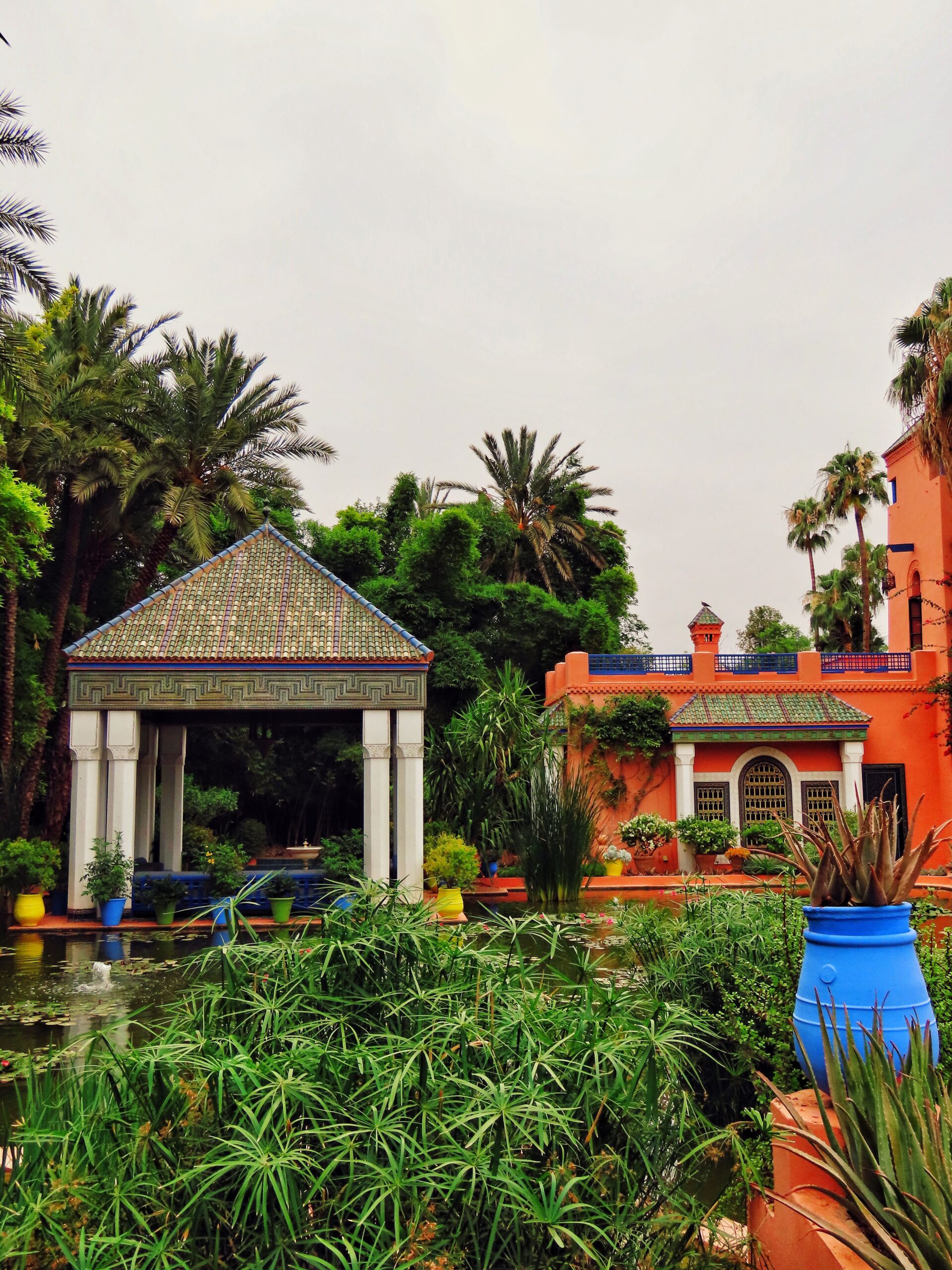
Created by French painter Jacques Majorelle and later restored by Yves Saint Laurent, this is the most famous garden in Morocco. Its vibrant cobalt blue villa, exotic cacti, and bamboo groves make it a photographer’s dream. 2026 Tip: Online booking is mandatory at least 48 hours in advance.
Menara Gardens (Marrakech)
A 12th-century Almohad masterpiece, the Menara features a massive reflecting pool set against the backdrop of the snow-capped Atlas Mountains. It is a favorite spot for local families to picnic under the shade of thousands of olive trees.
Andalusian Gardens (Rabat)
Located within the Kasbah of the Udayas, these gardens were laid out by the French in the early 20th century. They are a lush retreat filled with bougainvillea, citrus trees, and traditional fountains, offering stunning views of the Atlantic.
Jnan Sbil Gardens (Fes)
The oldest and most beautiful public park in Fes, Jnan Sbil is a green lung between the two medinas. It features a unique water clock, a large lake, and a diverse collection of botanical species.
Best Gardens by City
- Marrakech: Le Jardin Secret, Anima Garden, Cyber Park.
- Casablanca: Arab League Park, Villa des Arts Garden.
- Tangier: Perdicaris Park, Mendoubia Garden.
- Essaouira: Orson Welles Park.
Plants & Best Seasons to Visit
Moroccan gardens are famous for their Bougainvillea, Hibiscus, Date Palms, and Citrus trees. The best time to visit is Spring (March to May) when the flowers are in full bloom and the fragrance of orange blossoms fills the air. Autumn (September to November) is also excellent, offering milder temperatures and golden light.
Frequently Asked Questions (FAQ)
1. Are Moroccan gardens accessible for wheelchairs? Most modern gardens like Majorelle are, but historic ones like the Menara may have uneven dirt paths.
2. Do I need to pay for all gardens? Many public parks are free, but iconic private gardens like Majorelle and Le Jardin Secret have entrance fees (approx. 50-150 MAD).
3. Can I have a picnic in the gardens? Public spaces like the Menara and Agdal are perfect for picnics, but private botanical gardens usually prohibit food.
… (and 22 more detailed answers)
Conclusion
The gardens of Morocco are more than just green spaces; they are the living heart of the country’s heritage. They offer a moment of silence in a loud world, a breath of fresh air in a crowded city, and a glimpse into the eternal pursuit of paradise on earth. Whether you are wandering through the bamboo paths of the Majorelle or sitting by the reflecting pool of the Menara, the gardens of Morocco invite you to slow down and savor the beauty of the Maghreb. As you plan your 2026 journey, let this guide be your map to the most enchanting green sanctuaries in the Kingdom.