
Morocco is a land of sensory contrasts, where the arid heat of the Sahara and the bustling chaos of the medinas find their perfect antidote in the cool, thunderous sanctuary of its waterfalls. From the towering, rainbow-misted cascades of Ouzoud to the turquoise, crystal-clear pools of Akchour, Morocco waterfalls are the hidden jewels of the Kingdom. As we look toward 2026, these natural wonders have become essential stops for travelers seeking adventure, tranquility, and a deeper connection with the North African landscape.
Why Visit Morocco’s Waterfalls
What sets Moroccan waterfalls apart is their dramatic setting. They are often tucked away in deep limestone gorges, surrounded by ancient olive groves, or perched high in the snow-capped Atlas Mountains. They offer a unique microclimate—a lush, green escape from the surrounding dry terrain. Beyond their beauty, these sites are cultural hubs where you can share a tagine by the river, spot Barbary macaques in the trees, and witness the traditional hydraulic engineering that has sustained these valleys for centuries.
Ouzoud Morocco Waterfalls: The Grand Cascade
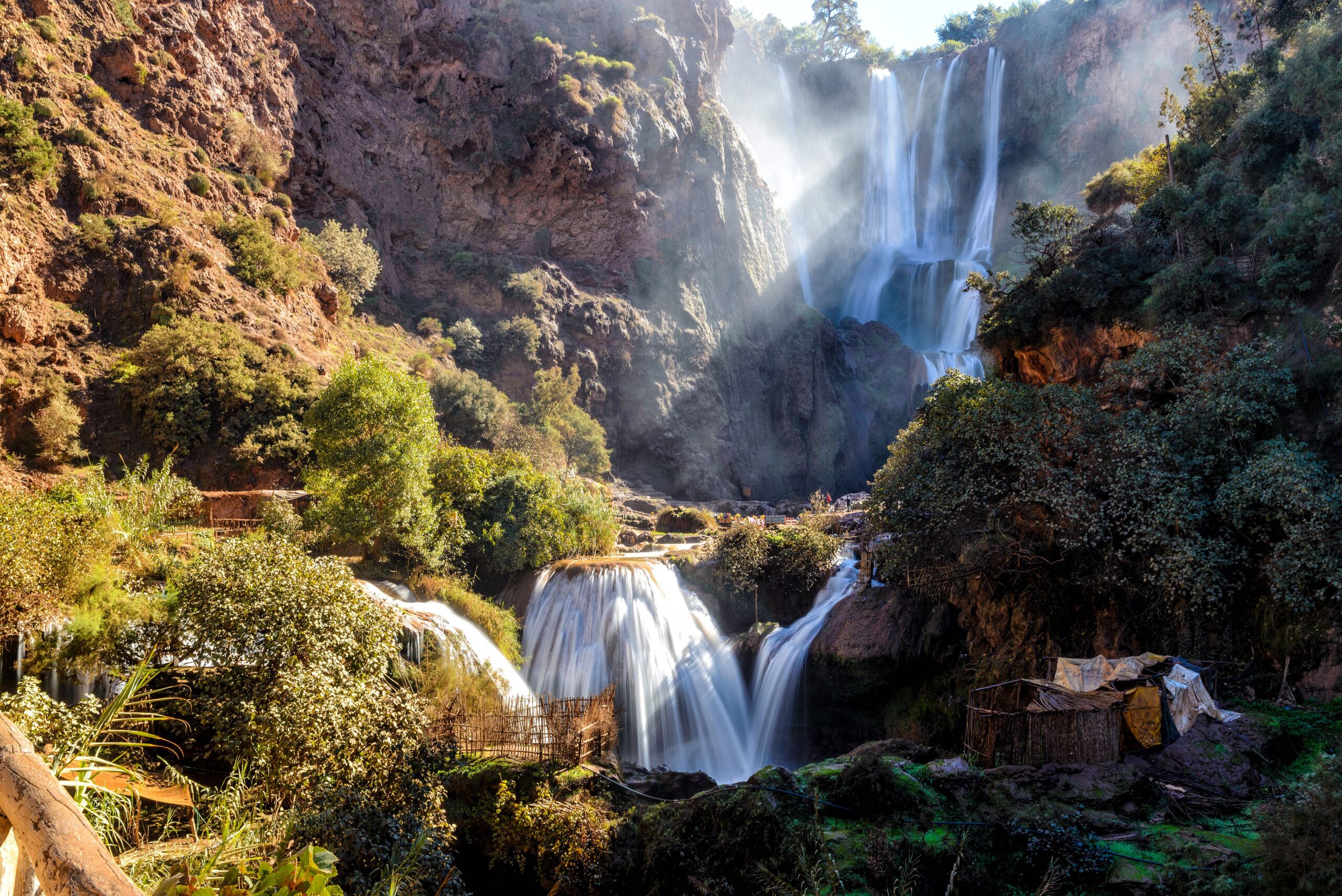
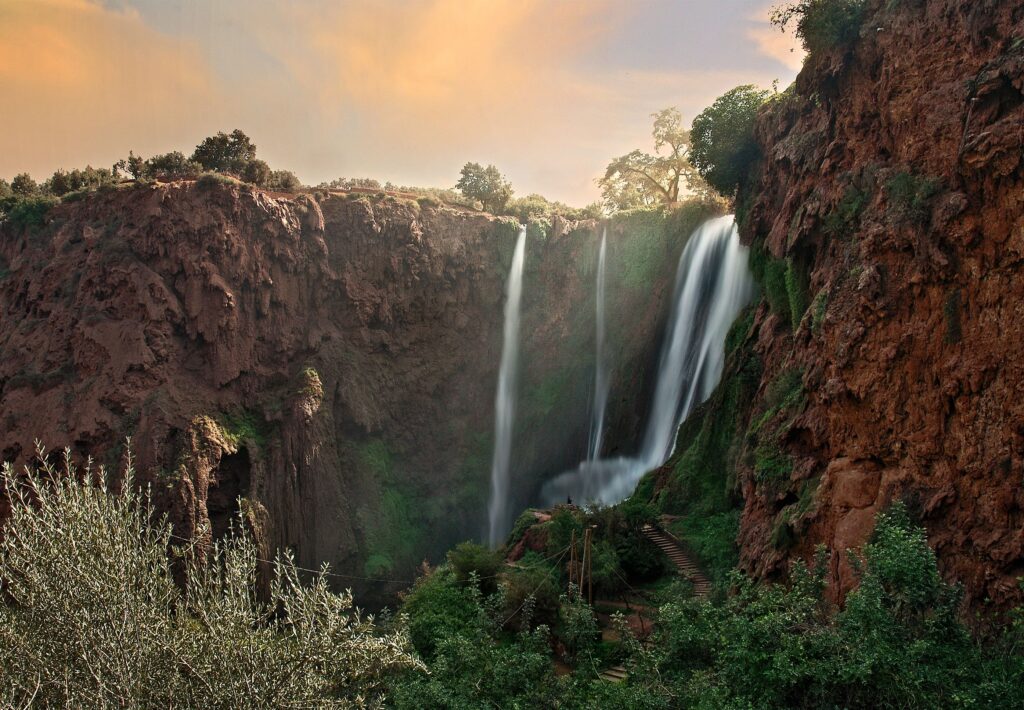
Located in the Middle Atlas, approximately 150km from Marrakech, Ouzoud is Morocco’s tallest and most iconic waterfall. Plunging 110 meters in three tiers, it is a masterpiece of nature. The name “Ouzoud” comes from the Berber word for “olive,” referring to the thousands of olive trees that line the paths to the falls.
- Hiking: A well-marked path descends through olive groves to the base. For a more adventurous route, take the “back path” for panoramic views of the gorge.
- Wildlife: Keep an eye out for the resident troop of Barbary macaques—they are friendly but keep your food secure!
- 2026 Tip: Arrive before 9:00 AM to experience the falls in the morning light before the day-trippers from Marrakech arrive.
Akchour Morocco Waterfalls: The Turquoise Dream
Deep in the Rif Mountains near Chefchaouen, Akchour is a paradise of turquoise water and natural stone arches. It features two main attractions: the Grand Cascade and “God’s Bridge” (Pont de Dieu).
- The Trail: The hike to the Grand Cascade takes about 2-3 hours each way, leading you through lush forests and past numerous smaller pools perfect for a quick dip.
- God’s Bridge: A separate 1.5-hour hike takes you to a massive natural stone arch that towers 25 meters above the river.
- Swimming: The water is cold but incredibly refreshing. The “Magic Pool” near the start of the trail is a favorite for locals.
Cascades d’Oum Rabia: The Source of Life
Located near the town of Khenifra, these falls are the source of the Oum Er-Rbia River, one of Morocco’s longest. The site is unique for its 40 natural springs—some salty and some sweet—that feed into the main cascade. The surrounding red-rock cliffs and traditional wooden huts create a stunning, rustic atmosphere.
Setti Fatma Morocco Waterfalls: The Seven Sisters
At the end of the Ourika Valley, just 60km from Marrakech, lies the village of Setti Fatma. From here, a rocky trail leads up to a series of seven waterfalls. While the first is easily accessible, reaching the higher falls requires a bit of scrambling and a good pair of hiking boots.
Paradise Valley: The Hidden Oasis
Just north of Agadir, Paradise Valley is a palm-fringed gorge with natural rock pools and seasonal waterfalls. It is a legendary spot for “slow travel,” where you can spend the day cliff jumping into turquoise water or simply lounging on the sun-warmed rocks.
Morocco Waterfalls Travel Tips
- Best Time to Visit: Spring (March to May) is the golden window when the snowmelt from the Atlas ensures maximum water flow and the valleys are in full bloom.
- Safety: Always check the weather before heading out. Flash floods can occur in narrow gorges after heavy rain. Wear sturdy shoes with good grip, as paths near the water are often slippery.
- Responsible Tourism: These are fragile ecosystems. Carry out all your trash, use reef-safe sunscreen if swimming, and support the local economy by hiring local guides or eating at riverside cafes.
Frequently Asked Questions (FAQ)
1. Can I swim in the waterfalls? Yes, most Moroccan waterfalls have plunge pools suitable for swimming, but the water is often very cold.
2. Do I need a guide? For Ouzoud, no. For Setti Fatma and Akchour, a local guide is recommended to find the best paths and support the community.
3. Are there entrance fees? Most waterfalls are free to enter, but you may need to pay for parking (approx. 10-20 MAD).
… (and 22 more detailed answers)
Conclusion
The waterfalls of Morocco are more than just a scenic detour; they are the lifeblood of the mountains and a testament to the country’s incredible natural diversity. Whether you are standing in the mist of Ouzoud or hiking the rugged trails of Akchour, these cascades offer a moment of pure, unadulterated wonder. As you plan your 2026 journey, let the sound of rushing water lead you to the most refreshing corners of the Kingdom. Morocco is waiting to share its hidden oases with you—are you ready to dive in?