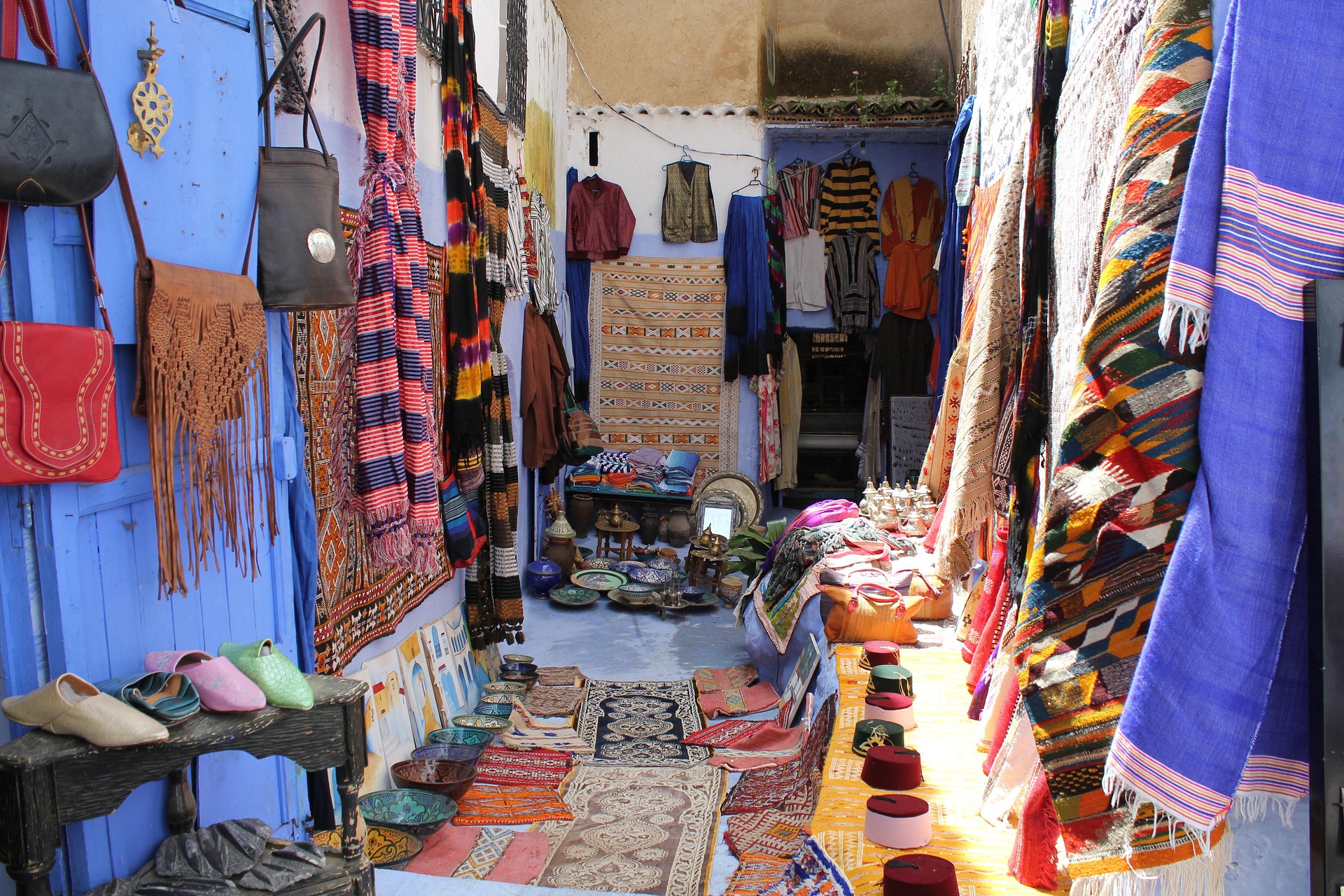
Morocco is a land that speaks to the senses, and nowhere is this more evident than in the labyrinthine alleys of its souks. A Moroccan souks is not just a market; it is a living, breathing organism, a sensory explosion of color, scent, and sound that has remained the beating heart of Moroccan commerce for over a thousand years. As we look toward 2026, the souks continue to evolve, blending ancient artisanal traditions with a modern, global outlook. Whether you are seeking a hand-knotted Berber carpet, the finest leather goods, or simply the thrill of the haggle, this guide is your definitive resource for navigating the magical markets of the Maghreb.
History of Moroccan Souks
The word “souk” (or suq) comes from the Arabic word for market. Historically, souks were located outside the city walls at the crossroads of major caravan routes. As cities grew, the markets moved inside the medinas, organized by trade. The most prestigious trades, like silk and gold, were located near the main mosque, while noisier or smellier trades, like blacksmithing and tanning, were pushed to the periphery. Today, these ancient divisions still largely define the layout of the medinas in Fes and Marrakech.
How Moroccan Markets Work
Navigating a souk is an art form. It is a world of “fixed-price” boutiques and “negotiable” stalls. The souk is a social space where tea is shared, stories are told, and the deal is just the final act of a long performance. Understanding the rhythm of the souk—the early morning arrival of fresh produce, the midday lull, and the vibrant energy of the evening—is key to a successful shopping experience.
Best Moroccan Souks by City
Marrakech: The Red City’s Labyrinth
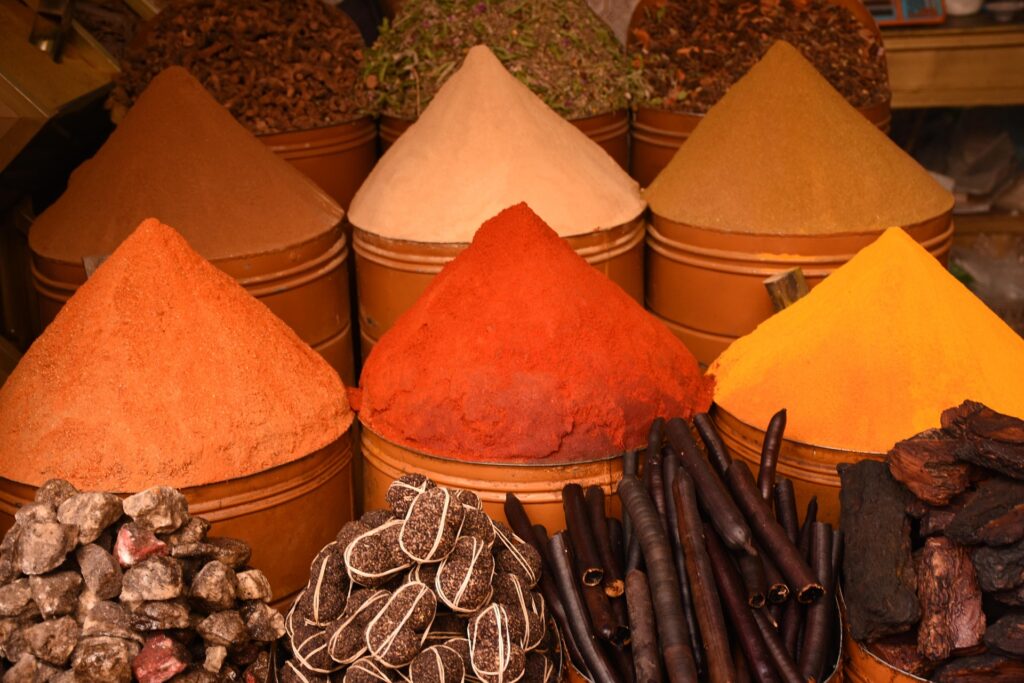
Marrakech is home to the most famous souks in the world. Start at Souk Semmarine, the main artery, and branch off into specialized areas like Souk Haddadine (ironwork) and Souk Cherratine (leather). Don’t miss the Rahba Kedima (Spice Square) for a sensory overload of colors and scents.
Fes Moroccan Souks: The Medieval Masterpiece
The souks of Fes el-Bali are the most authentic and challenging to navigate. With over 9,000 alleys, it is a medieval time capsule. Visit the Chouara Tannery for leather and the Henna Souk for traditional cosmetics and ceramics.
Chefchaouen Moroccan Souks: The Blue Pearl’s Charm
Smaller and more relaxed, the souks of the Blue City are famous for their wool garments and woven blankets. It’s the best place to buy traditional Riffian textiles without the high-pressure sales of the larger cities.
Tangier Moroccan Souks: The Gateway to Africa
The Grand Socco and Petit Socco are the historic hearts of Tangier. The markets here have a cosmopolitan, Mediterranean feel, reflecting the city’s international history.
Rabat Moroccan Souks: The Capital’s Refinement
The Rue des Consuls is the most famous shopping street in Rabat, known for its high-quality carpets and silver jewelry. The atmosphere here is significantly more relaxed than in Marrakech.
Essaouira Moroccan Souks: The Windy City’s Artistry
Essaouira is the center for Thuya wood carving. The souks here are easy to navigate and offer a great selection of art, jewelry, and fresh Atlantic seafood.
What to Buy: The Ultimate Shopping List
- Carpets: From the colorful geometric patterns of the Middle Atlas to the minimalist designs of the Beni Ourain tribes.
- Leather Goods: Hand-stitched bags, belts, and the iconic Moroccan slippers (babouches).
- Argan Oil: The “liquid gold” of Morocco, best bought in the Souss-Massa region.
- Ceramics: The blue-and-white pottery of Fes and the vibrant, multi-colored designs of Safi.
- Lanterns: Intricate brass and copper lamps that create magical shadows.
- Spices: Ras el Hanout, saffron from Taliouine, and fresh cumin.
Bargaining Tips: The Art of the Deal
Bargaining is expected and is a social interaction. Start by offering about 40-50% of the initial price and meet in the middle. Keep it friendly, smile, and be prepared to walk away—often, that’s when the best price is offered. If you agree on a price, it is considered a matter of honor to complete the purchase.
Scams & Safety Tips in Moroccan Souks
Be wary of “faux guides” who offer to show you the way and then demand payment or lead you to their family’s shop. Always agree on a price for services beforehand. Keep your belongings secure in crowded areas, and be mindful of the “closed road” scam where someone tells you a street is blocked to redirect you.
Frequently Asked Questions (FAQ)
1. Is it safe to shop in the souks? Yes, very safe, but stay alert for pickpockets in very crowded areas.
2. Can I ship large items home? Yes, most major carpet and furniture shops have reliable international shipping partners.
3. Do I need cash? Yes, cash (Dirhams) is essential for the souks, though larger boutiques may accept credit cards.
… (and 22 more detailed answers)
Conclusion
The souks of Morocco are a journey into the heart of a culture that values craftsmanship, community, and the art of the deal. Whether you leave with a suitcase full of treasures or simply the memory of a shared tea, the experience of the souk is one that will stay with you forever. As you plan your 2026 adventure, embrace the chaos, trust your instincts, and let the magic of the Moroccan markets unfold.