Welcome to Rabat, the “City of Lights” and Morocco’s sophisticated coastal capital. Often overshadowed by the chaotic charm of Marrakech or the ancient labyrinth of Fes, Rabat offers a refreshing, refined alternative. In 2026, the city is stepping into a global spotlight as the UNESCO World Book Capital and the home of groundbreaking architectural marvels like the Grand Theatre of Rabat. Whether you’re a history buff, a foodie, or a slow traveler, this guide will help you navigate the perfect blend of tradition and modernity in Morocco’s most liveable city.
Table of Contents
- Why Visit Rabat?
- A Brief History of Rabat
- Best Time to Visit & Seasonal Advice
- How to Get There: Transportation Guide
- Where to Stay: Neighborhood & Accommodation Guide
- Top 15 Things to Do in Rabat
- Hidden Gems & Authentic Experiences
- Savoring Rabat: Food & Local Specialties
- Practical Logistics: SIMs, Money & Safety
- Sample 3-Day Master Itinerary
- Frequently Asked Questions
Why Visit Rabat?
Rabat is unique because it doesn’t try too hard. It is a city of wide, palm-lined boulevards, clean Atlantic breezes, and a remarkably relaxed atmosphere. Unlike other Moroccan hubs, you won’t find aggressive touts here. Instead, you’ll find a UNESCO-listed heritage that spans from the 12th-century Almohad dynasty to the elegant French Protectorate architecture of the “Ville Nouvelle.” In 2026, the addition of the Mohammed VI Tower and the Zaha Hadid-designed Grand Theatre makes it a must-visit for fans of contemporary design.
A Brief History of Rabat
Founded in the 12th century by the Almohad ruler Abd al-Mu’min as a military outpost (ribat), the city reached its first peak under Yaqub al-Mansur, who intended to make it the capital of his empire. After a period of decline and a colorful era as a pirate republic (the Republic of Bou Regreg) in the 17th century, Rabat was chosen as the administrative capital during the French Protectorate in 1912. Today, it remains the seat of the Moroccan government and the residence of King Mohammed VI.
Best Time to Visit & Seasonal Advice
Rabat enjoys a Mediterranean climate with Atlantic influences. The “best” time depends on your goals:
- Spring (March to May): The absolute best time. Temperatures are mild (18-23°C), and the city’s many gardens are in full bloom.
- Summer (June to August): While other parts of Morocco bake, Rabat stays relatively cool thanks to the ocean breeze. This is the peak season for the Mawazine Festival, one of the world’s largest music festivals.
- Autumn (September to November): Another excellent window with warm days and cool evenings, perfect for walking the Medina.
- Winter (December to February): Mild but rainy. It’s a great time for museum-hopping and enjoying the city without any crowds.
How to Get There: Transportation Guide
Rabat is exceptionally well-connected and serves as a major transit hub for the country.
- By Air: Rabat-Salé Airport (RBA) serves many European cities. A taxi to the center costs a flat rate of 150 MAD ($15). Alternatively, Casablanca’s CMN airport is a 90-minute train ride away.
- By Train: The Al Boraq high-speed train connects Rabat to Tangier (1h 20m) and Casablanca (50m).
- Tramway: The modern tram system connects Rabat and Salé. It’s clean, efficient, and costs only 6 MAD ($0.60) per trip.
- Petit Taxis (Blue): Plentiful and cheap for city travel. Always ensure the meter (compteur) is running.
Where to Stay: Neighborhood & Accommodation Guide
Choosing the right neighborhood is key to your Rabat experience:
- The Medina: Best for Couples & Authenticity. Stay in a traditional riad for a peaceful, historic feel. Recommendation: Riad Kalaa.
- Agdal: Best for Digital Nomads & Shopping. A trendy, modern district with high-end boutiques, cafes, and coworking spaces. Recommendation: Arribat Center Apartments.
- Hassan: Best for First-Timers & Sightseeing. Close to the Hassan Tower and major landmarks. Recommendation: Hotel Balima.
- Bouregreg Marina: Best for Luxury & Families. Modern hotels with river views and easy access to the Grand Theatre. Recommendation: Fairmont La Marina.
Top 15 Things to Do in Rabat
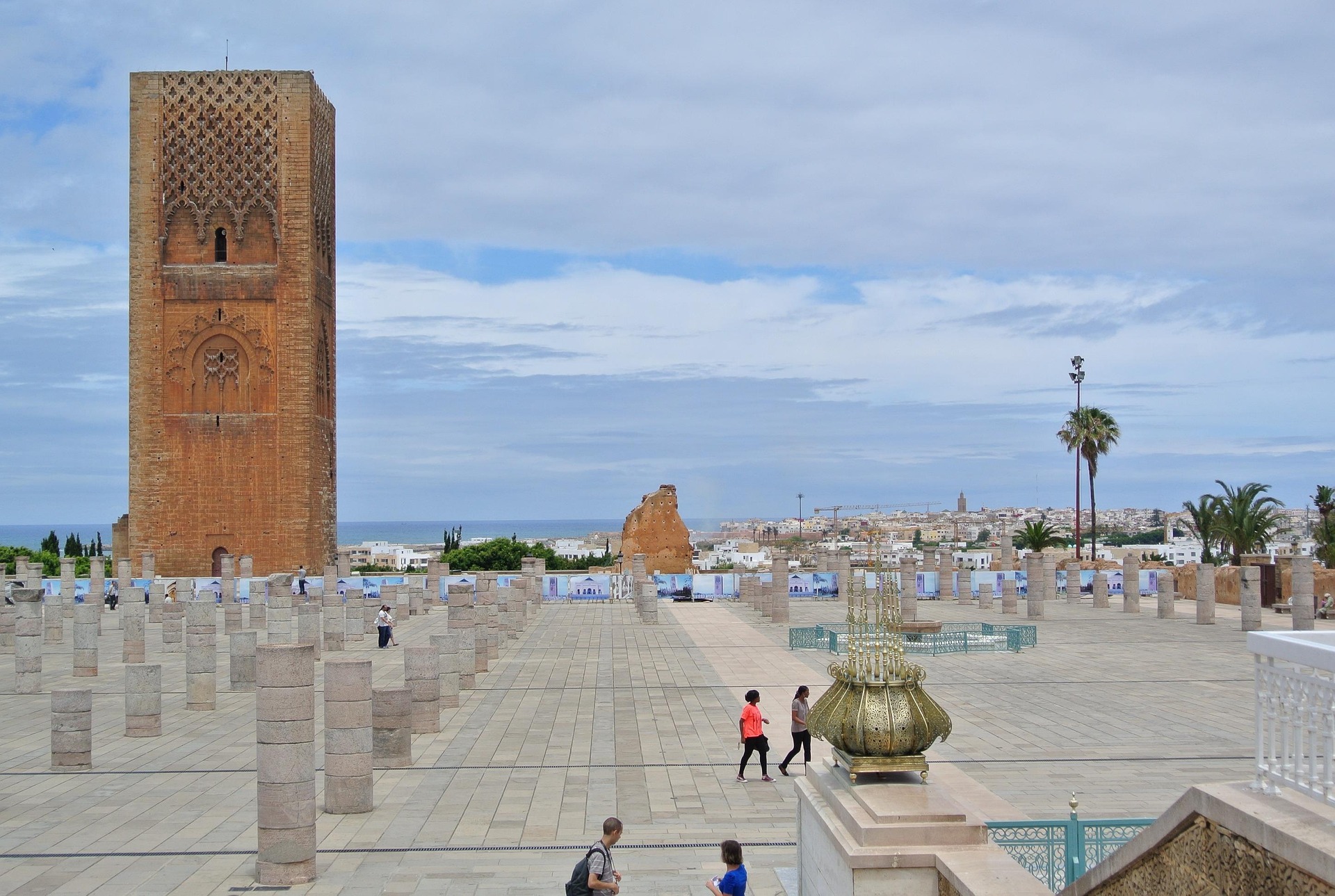
1. Hassan Tower (Le Tour Hassan)
The iconic symbol of Rabat. This 12th-century minaret was intended to be the largest in the world, but construction stopped when Sultan Yaqub al-Mansur died. The surrounding forest of 200 stone columns gives you a sense of the grand scale originally planned.
2. Kasbah of the Udayas (Oudaïas)
Step into a world of blue and white. This fortified citadel overlooks the Atlantic and the Bouregreg River. Wander through its narrow alleys, visit the oldest mosque in the city, and enjoy a mint tea at the famous Café Maure.
3. Mausoleum of Mohammed V
Located across from the Hassan Tower, this masterpiece of modern Alaouite architecture houses the tombs of the current King’s father and grandfather. The intricate zellij tilework and hand-carved cedar ceilings are breathtaking.
4. Chellah Necropolis
A hauntingly beautiful site where Roman ruins meet medieval Islamic architecture. It’s famous for the dozens of storks that nest atop the ancient minarets and walls. (Note: Check for reopening dates in 2026 as restoration has been ongoing).
5. Rabat Medina
Unlike the medinas of Marrakech, Rabat’s old city is easy to navigate and much more authentic. Head to Rue des Consuls for traditional crafts, rugs, and leather goods.
6. Grand Theatre of Rabat
A 2026 highlight. This futuristic building by Zaha Hadid is an architectural marvel. Even if you don’t catch a show, the exterior design is a photographer’s dream.
7. Mohammed VI Tower
The tallest building in Morocco. Head to the observation deck for a 360-degree view of Rabat and its sister city, Salé.
8. Andalusian Gardens
Located within the Kasbah, these lush gardens were laid out by the French in the early 20th century. It’s a peaceful retreat filled with orange trees, palms, and bougainvillea.
9. Mohammed VI Museum of Modern and Contemporary Art (MMVI)
The first large-scale museum in Morocco dedicated to contemporary art. It hosts world-class exhibitions and showcases the best of Moroccan modernism.
10. Rabat Beach & Surf Schools
The city beach is great for a sunset stroll. For surfers, the waves here are consistent and there are several schools offering lessons for beginners.
11. Stroll the Bouregreg Marina
Walk along the riverfront, take a traditional wooden boat (flouka) across to Salé, or enjoy a meal at one of the many riverside restaurants.
12. National Photography Museum
Housed in the historic Fort Rottembourg, this museum celebrates Moroccan and international photography in a stunning coastal setting.
13. Explore the Ville Nouvelle
Walk down Avenue Mohammed V to see the Parliament building, the Bank Al-Maghrib, and the elegant Art Deco architecture from the French era.
14. Visit Salé
Just across the river, Salé is Rabat’s more traditional twin. Visit the Great Mosque and the Medersa (theological college) for incredible Merenid architecture.
15. Exotic Gardens of Bouknadel
A short drive from the city, these gardens feature plants from all over the world, arranged in themed sections like “The Caribbean” or “The Congo.”
Hidden Gems & Authentic Experiences
- The Lighthouse (Phare de Rabat): A quiet spot at the end of the Corniche, perfect for watching the Atlantic waves crash against the rocks.
- Café Maure: Located in the Kasbah, it’s the best place for traditional almond pastries and mint tea with a view.
- Rue des Consuls Weavers: Look for the small workshops where traditional Rabat carpets are still hand-knotted.
- The Royal Palace (Mechouar): While you can’t enter the palace, you can walk through the grand grounds and admire the impressive gates.
Savoring Rabat: Food & Local Specialties
Rabat is a foodie’s paradise, blending coastal freshness with imperial refinement.
- Seafood Pastilla: A Rabat specialty. Unlike the sweet pigeon version in Fes, this is savory and packed with fresh Atlantic fish and vermicelli.
- Grilled Sardines: Head to the simple stalls near the port for the freshest catch.
- Msemen & Maakouda: Essential street food found in the Medina.
- Dar Naji: A local favorite for traditional Moroccan decor and authentic tagines.
Practical Logistics: SIMs, Money & Safety
| Service | Recommendation | Details |
|---|---|---|
| SIM Cards | Maroc Telecom or Inwi | Available at the airport or kiosks. 10GB for approx. 100 MAD ($10). |
| ATMs | Attijariwafa or BMCE | Widely available. Use bank-attached ATMs for better security. |
| Emergency | Police: 19 / Ambulance: 15 | Keep these numbers saved. Most operators speak French. |
| Currency | Moroccan Dirham (MAD) | Cash is king in souks; cards accepted in hotels and Agdal shops. |
Safety & Scams: Rabat is one of the safest cities in Morocco. “Hustlers” are rare here. Standard precautions apply: keep an eye on your belongings in the Medina and always use the taxi meter.
Sample 3-Day Master Itinerary
Day 1: Imperial Heritage
Morning: Hassan Tower and Mausoleum of Mohammed V. Lunch: Seafood at the Marina. Afternoon: Explore the Kasbah of the Udayas and Andalusian Gardens. Evening: Dinner in the Medina.
Day 2: Modern Rabat & Art
Morning: Mohammed VI Museum (MMVI). Lunch: Trendy café in Agdal. Afternoon: Grand Theatre and a walk along the Bouregreg. Evening: Sunset at the beach or a drink at a rooftop bar.
Day 3: Twin Cities & Nature
Morning: Take a boat across to Salé to visit the Medersa. Lunch: Traditional meal in Salé. Afternoon: Exotic Gardens of Bouknadel. Evening: Farewell dinner at Dar Naji.
Frequently Asked Questions
Is Rabat worth visiting? Absolutely. It offers a more relaxed and authentic Moroccan experience compared to the more tourist-heavy cities.
How many days do I need? 2 to 3 days is perfect to see the main highlights and soak in the atmosphere.
Is it safe for solo female travelers? Yes, Rabat is very safe and respectful. Standard modest dress is recommended.
Conclusion
Rabat is a city that rewards the curious traveler. In 2026, with its new status and architectural landmarks, there has never been a better time to explore the Moroccan capital. Ready to explore more? Check out our Casablanca Guide or plan your next stop with our Tangier Guide.