
Casablanca is often misunderstood. While many travelers rush through its airport on their way to the red walls of Marrakech or the blue alleys of Chefchaouen, those who linger discover a city that is the beating heart of modern Morocco. In 2026, Casablanca stands as a fascinating blend of French colonial heritage, cutting-edge architecture, and deep-rooted North African traditions. This is the Morocco of today—dynamic, gritty, and undeniably authentic.
Table of Contents
- Why Visit Casablanca?
- History of Casablanca: From Anfa to Art Deco
- Best Time to Visit & Seasonal Advice
- How to Get There: Transportation Guide
- Where to Stay: Neighborhood & Accommodation Guide
- Top 15 Things to Do in Casablanca
- Hidden Gems & Authentic Experiences
- Savoring Casablanca: Food & Local Specialties
- Practical Logistics: SIMs, Money & Safety
- Sample 3-Day Master Itinerary
- Frequently Asked Questions
Why Visit Casablanca?
Casablanca offers a different perspective than the “imperial” cities. It’s where you see how Moroccans actually live, work, and play. From the architectural marvel of the Hassan II Mosque to the Art Deco buildings of the city center, Casablanca is a visual feast for those who appreciate urban exploration. It’s also the country’s culinary capital, offering everything from street-side snails to world-class fine dining.
History of Casablanca: From Anfa to Art Deco
Originally a Berber settlement known as Anfa, the city was destroyed by the Portuguese in the 15th century and rebuilt as “Casa Branca.” However, it was during the French Protectorate in the early 20th century that Casablanca was transformed into a major port and a laboratory for modern urban planning. This history is etched into the city’s streets, where Neo-Moorish and Art Deco styles sit side-by-side, creating a unique “Mauresque” aesthetic.
Best Time to Visit & Seasonal Advice
The best time to visit Casablanca is during the Spring (April to June) and Autumn (September to November). The weather is mild and perfect for walking.
- Spring (April-June): Mild temperatures (20-25°C) and clear skies. Ideal for the Corniche.
- Summer (July-August): High humidity but ocean breezes keep it cooler than Marrakech. Peak season for beach clubs.
- Autumn (September-November): Warm days and fewer crowds. The best time for urban exploration.
- Winter (December-March): Rainy but mild. Great for budget travelers and museum-hopping.
How to Get There: Transportation Guide
Casablanca is the primary gateway to Morocco and its most connected city.
- By Air: Mohammed V International Airport (CMN) is 30km from the center. The airport train (ONCF) runs every hour to Casa Voyageurs and Casa Port (approx. 50 MAD).
- By Train: The Al Boraq high-speed train connects Casablanca to Tangier (2h 10m) and Rabat (50m).
- Tramway: Two main lines cross the city. It’s clean, efficient, and costs 6 MAD per trip.
- Petit Taxis (Red): Plentiful for city travel. Always insist on the meter (compteur). Minimum fare is 7.50 MAD.
Where to Stay: Neighborhood & Accommodation Guide
Choosing the right neighborhood is essential for your Casablanca experience:
- Gauthier: Best for Digital Nomads & Foodies. Trendy, walkable, and packed with the city’s best cafes and galleries. Recommendation: Art Palace Suites.
- Maarif: Best for Shopping & Mid-Range. The commercial heart with international brands and local boutiques. Recommendation: Kenzi Tower Hotel.
- Sour Jdid / Oceanfront: Best for Luxury & Views. Near the Hassan II Mosque with high-end international chains. Recommendation: Four Seasons Casablanca.
- Ain Diab: Best for Families & Nightlife. Close to the beach, Morocco Mall, and the Corniche. Recommendation: Pestana Casablanca.
Top 15 Things to Do in Casablanca
1. Hassan II Mosque
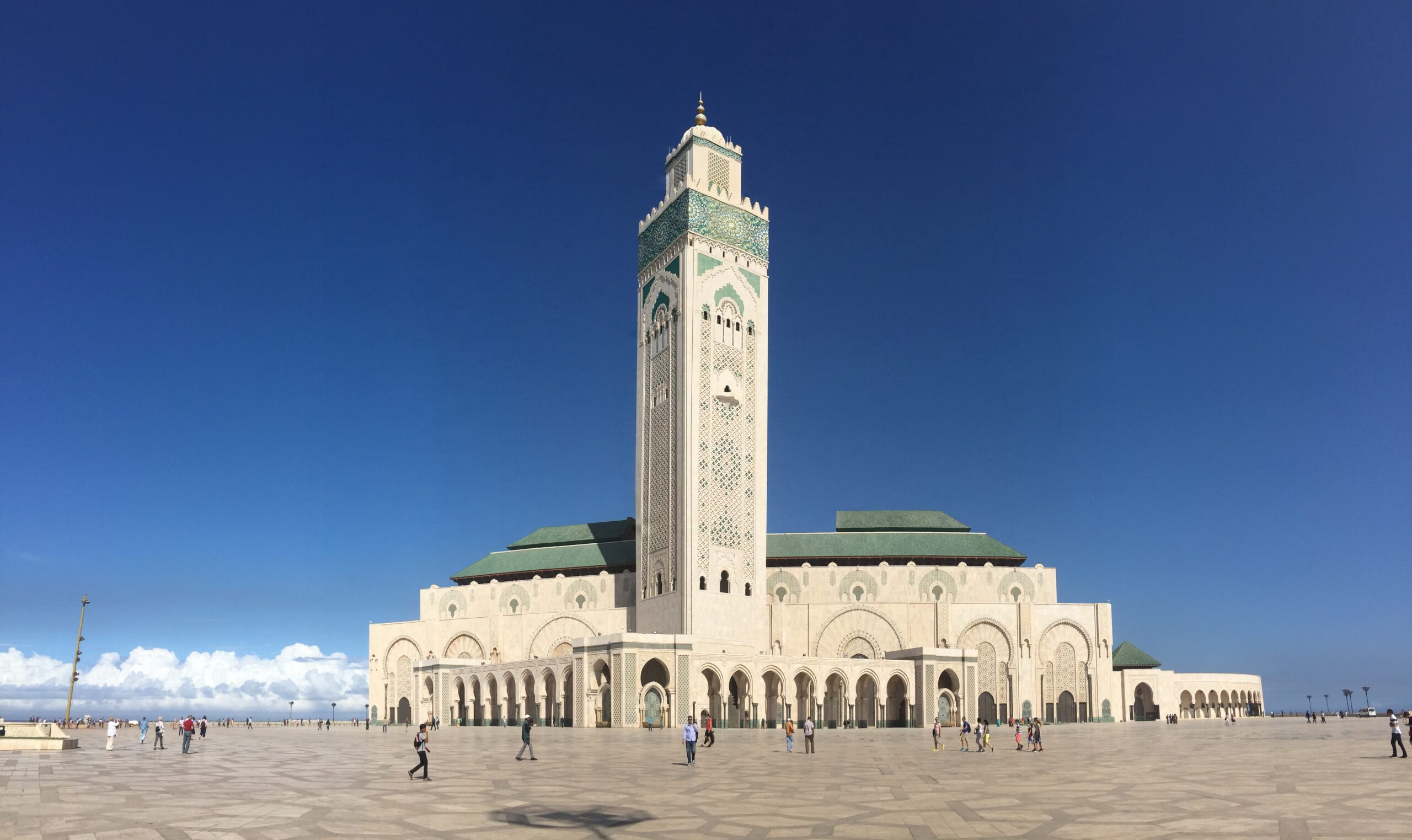
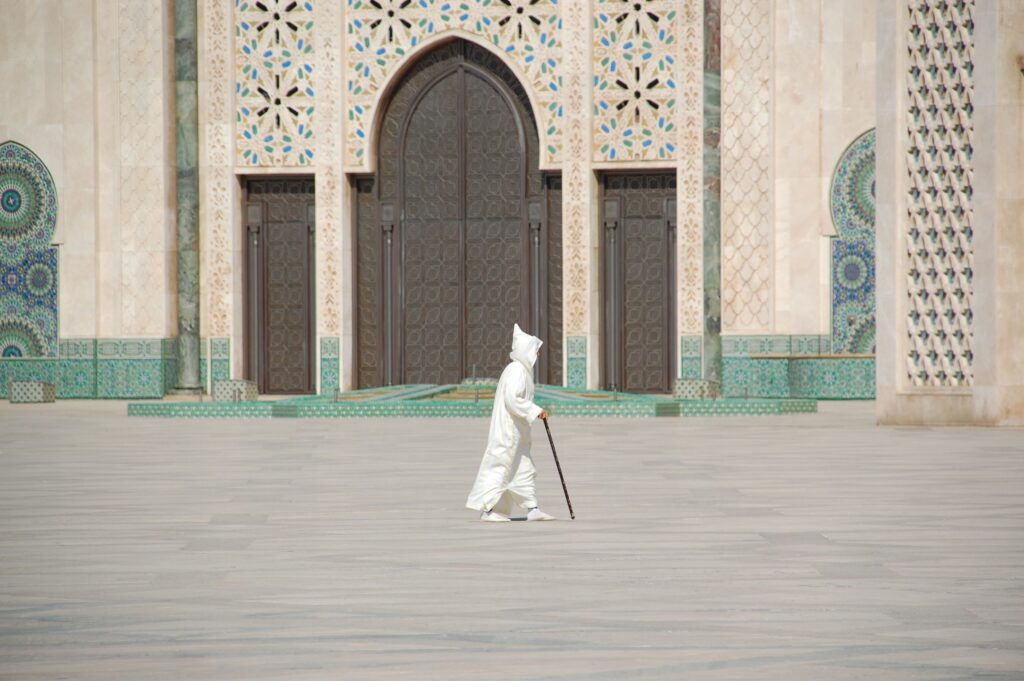
The crown jewel of the city. Built partially over the Atlantic Ocean, it features the world’s second-tallest minaret. It is one of the few mosques in Morocco open to non-Muslims via guided tours. The craftsmanship—carved wood, zellij tilework, and marble—is breathtaking.
2. Corniche Ain Diab
The city’s boardwalk. Perfect for a sunset stroll, the Corniche is lined with beach clubs, restaurants, and cafes. It’s the place to see and be seen in Casablanca.
3. Morocco Mall
One of the largest shopping centers in Africa. Even if you aren’t shopping, the massive indoor aquarium (Aquadream) and the musical fountain are worth a visit.
4. Old Medina
While smaller and less labyrinthine than Fes, Casablanca’s Old Medina offers a more local, less touristy vibe. It’s a great place to find leather goods and traditional textiles at lower prices.
5. Habous Quarter (New Medina)
Built by the French in the 1920s to look like a traditional medina, the Habous is clean, orderly, and incredibly charming. Don’t miss the famous Bennis Habous pastry shop.
6. Rick’s Café
A recreation of the bar from the 1942 film *Casablanca*. While the movie wasn’t actually filmed here, the atmosphere is spot-on. Reservations are essential for dinner.
7. Mohammed V Square
The administrative heart of the city, surrounded by grand buildings showcasing the “Mauresque” architectural style. It’s famous for its pigeons and the grand fountain.
8. Arab League Park
A recently renovated green lung in the center of the city. It’s a beautiful spot for a walk among palm trees and fountains, leading up to the Sacré-Cœur Cathedral.
9. Sacré-Cœur Cathedral
A stunning example of Neo-Gothic architecture with Moroccan influences. Now a cultural center, its white towers dominate the skyline near Arab League Park.
10. Villa des Arts
Housed in a beautiful 1930s Art Deco villa, this museum showcases contemporary Moroccan art and hosts regular cultural events.
11. Marché Central
The city’s main food market. It’s a sensory explosion of fresh seafood, produce, and flowers. Local Tip: Buy fresh fish at the market and have one of the nearby grills cook it for you on the spot.
12. Explore the Maarif District
The trendiest part of the city for shopping and cafes. It’s home to the Twin Center towers and offers a glimpse into the modern, cosmopolitan life of Casablanca’s youth.
13. Abderrahman Slaoui Museum
A private museum housing a remarkable collection of Moroccan jewelry, vintage posters, and gold boxes. It’s a hidden gem for history and art lovers.
14. El Hank Lighthouse
Climb the 256 steps of this historic lighthouse for the best panoramic views of the city and the Atlantic coastline.
15. Day Trip to El Jadida
Just 1.5 hours south, this UNESCO-listed Portuguese port city features a stunning underground cistern and historic ramparts overlooking the sea.
Hidden Gems & Authentic Experiences
- Sky 28: A bar at the top of the Twin Center offering the best night views of the illuminated Hassan II Mosque.
- L’Eglise du Sacré-Cœur: Often overlooked, the interior is a masterpiece of light and space.
- Bennis Habous: The most famous pastry shop in the city. Try their “Cornes de Gazelle.”
- Street Art in Gauthier: Wander the backstreets of Gauthier to find world-class murals by local and international artists.
Savoring Casablanca: Food & Local Specialties
Casablanca is Morocco’s culinary capital, where traditional flavors meet international flair.
- Seafood at the Port: Visit the Port de Pêche for the freshest grilled fish in the city.
- Casablanca Couscous: Traditionally served with seven vegetables. Try it at La Sqala.
- Raib & Harcha: The classic local breakfast. Raib is a traditional yogurt, and Harcha is a semolina griddle bread.
- Snails (Babbouche): A popular street food found in the evening near the Old Medina.
Practical Logistics: SIMs, Money & Safety
| Service | Recommendation | Details |
|---|---|---|
| SIM Cards | Maroc Telecom or Inwi | Available at the airport or kiosks. 10GB for approx. 100 MAD ($10). |
| ATMs | Attijariwafa or BMCE | Widely available. Use bank-attached ATMs for better security. |
| Emergency | Police: 19 / Ambulance: 15 | Keep these numbers saved. Most operators speak French. |
| Currency | Moroccan Dirham (MAD) | Cash is king in souks; cards accepted in malls and Gauthier. |
Safety & Scams: Casablanca is generally safe, but be alert for pickpockets in the Old Medina. Avoid walking alone in unlit areas at night. Always ensure taxis use the meter (compteur).
Sample 3-Day Master Itinerary
Day 1: The White City Icons
Morning: Guided tour of Hassan II Mosque. Lunch: Fresh seafood at the Port. Afternoon: Walk through the Habous Quarter and Bennis pastries. Evening: Dinner at Rick’s Café.
Day 2: Modern Casablanca
Morning: Arab League Park and Sacré-Cœur. Lunch: Trendy cafe in Gauthier. Afternoon: Shopping at Morocco Mall or Maarif. Evening: Sunset drinks on the Corniche.
Day 3: Art & History
Morning: Villa des Arts and Abderrahman Slaoui Museum. Lunch: Traditional tagine at La Sqala. Afternoon: Explore the Old Medina and street art. Evening: Farewell dinner in Gauthier.
Frequently Asked Questions
Is Casablanca worth visiting? Absolutely. It’s the best place to experience modern Moroccan culture and see the incredible Hassan II Mosque.
How many days do I need? 2 to 3 days is perfect to see the main highlights before moving on to other parts of the country.
Is it safe for solo female travelers? Yes, Casablanca is very cosmopolitan. Standard travel precautions apply; dress modestly to respect local customs.
Conclusion
Casablanca is a city of contrasts—where tradition meets ambition. It may not have the immediate fairy-tale charm of Marrakech, but its energy is infectious. By following this guide, you’ll discover the soul of the “White City.” Ready to explore more? Check out our Rabat Guide or plan your next stop with our Tangier Guide.